Producer · 2026

Patchwork:
Ōtautahi

A public interactive experience developed as a love letter to Ōtautahi Christchurch, where visitors can interact with and leave their mark on a shared digital city.

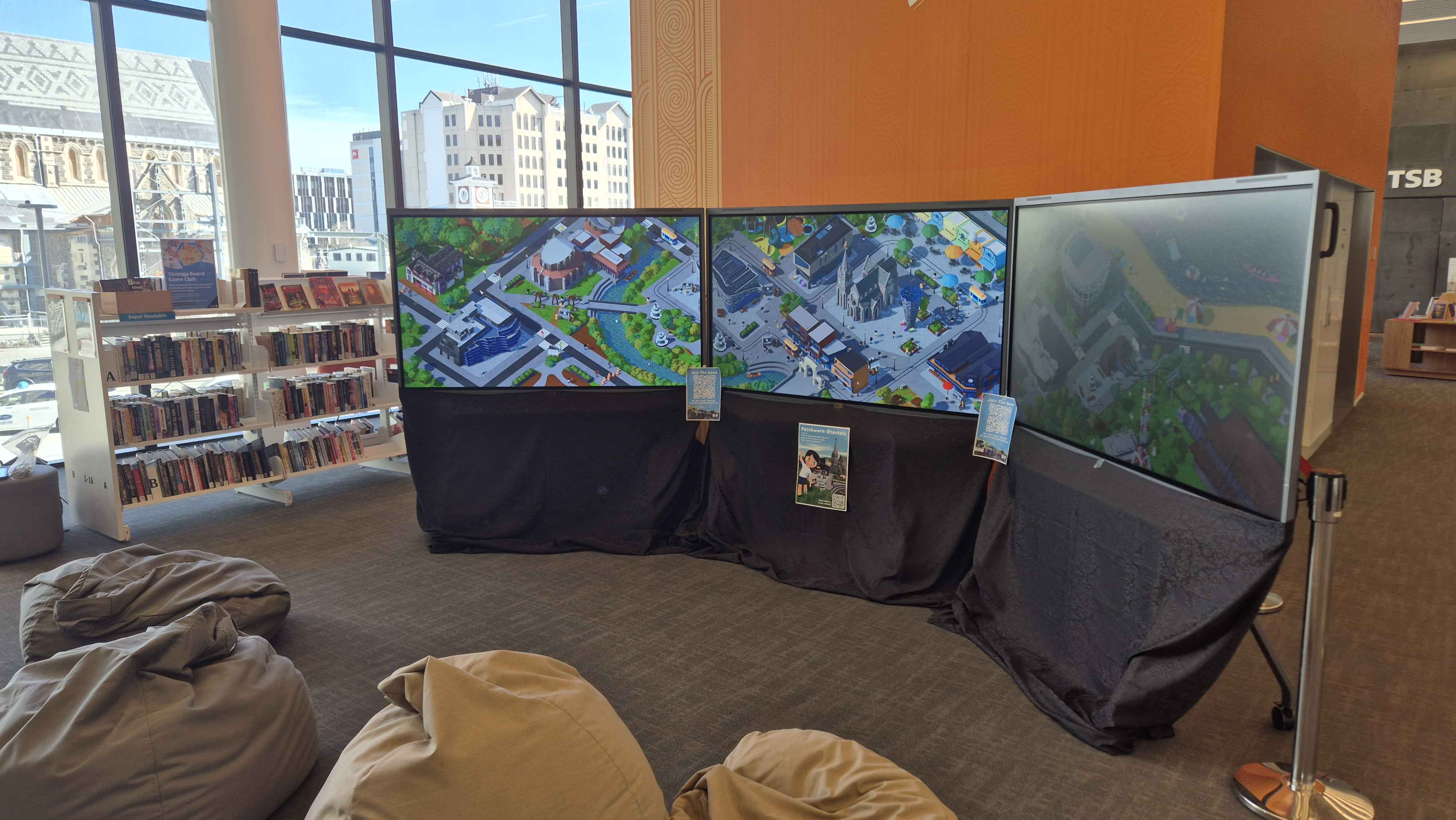
Patchwork Ōtautahi displayed across three screens at Tūranga

Role

Producer

Project

Public Interactive Experience

Partner

Christchurch City Libraries

Outcome

Public installation at Tūranga

01 / THE PROJECT

A living digital version of Christchurch.

Patchwork: Ōtautahi is a public interactive experience where visitors contribute to a shared digital city. Players complete short interactions that change the environment, allowing each person to leave a visible mark on the experience.

The project was developed by a multidisciplinary student team for public exhibition at Tūranga, Christchurch's central library. The final experience was designed to run across three screens and be approachable for a broad public audience.
02 / MY ROLE

Producing the project from development to public delivery.

As producer, my role was to keep the project moving across disciplines while balancing the team's creative ambitions with the practical requirements of delivering a public experience.

Production Planning

Scheduling, milestones, priorities, task tracking and production documentation.

Team Coordination

Coordinating work across programming, art, animation and technical art.

Scope Management

Reviewing features against available time and prioritising work toward the public exhibition.

Stakeholder Management

Coordinating requirements and communication with Christchurch City Libraries and other external contributors.

External Contributors

Managing communication, permissions and usage requirements for participating Christchurch street artists.

Exhibition Delivery

Supporting the technical and logistical planning required to move the project from development into a public installation.

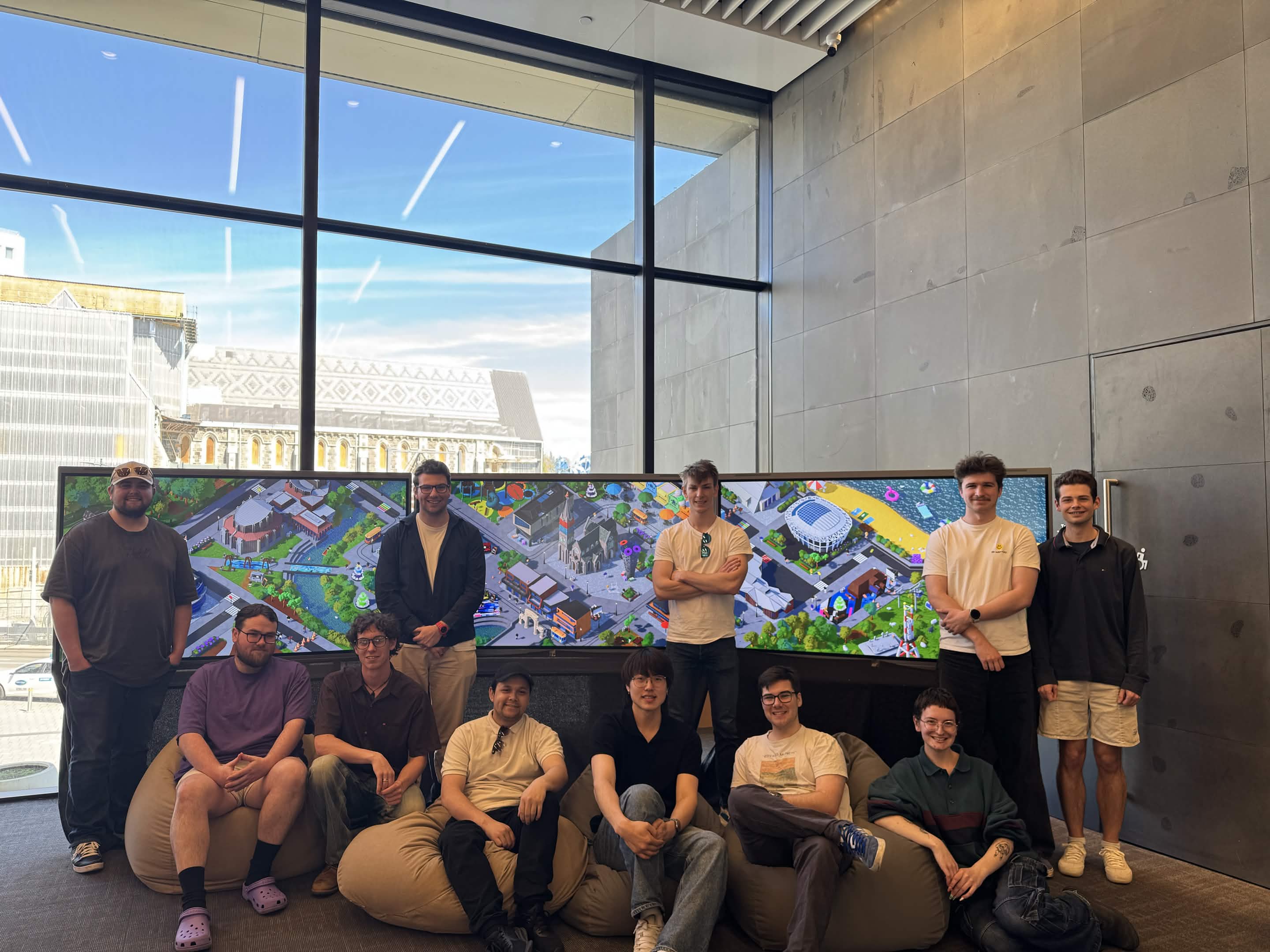
Patchwork Ōtautahi development team

The Team

A multidisciplinary production.

Patchwork: Ōtautahi was developed by a multidisciplinary team across programming, art, animation and technical art. As producer, a major part of my role was coordinating work across these disciplines and keeping the team aligned as the project moved toward public exhibition.

Production Challenge 01

Managing scope and priorities.

As development progressed, Patchwork accumulated more potential interactions and features than the team could realistically complete and polish before exhibition.

Patchwork production planning board

The Challenge

The number of possible features continued to grow while the exhibition date remained fixed. Continuing to add features risked leaving the overall experience unfinished or under-polished.

My Response

I worked with the team to review features against their value, development cost and remaining time. Lower-priority work was reduced or removed, and a cut-off was introduced for new tasks unless their value clearly justified the additional production cost.

The Outcome

Production shifted toward completing and polishing the existing experience, giving programming, art, animation and sound clearer priorities leading into the public exhibition.

Production Challenge 02

Finding a production system that worked for the team.

Formal production tools were useful for reporting progress, but they did not always provide the team with the visibility needed for day-to-day development.

The Challenge

Burndown charts were introduced during production, but long-running tasks, changing priorities and reporting periods made them difficult to use as the team's main production view.

My Response

I used FigJam as a central production space, with discipline-based Kanban boards that allowed tasks, priorities and progress to be viewed together.

The Outcome

The team had a production system that was easier to update and use during development while the formal reporting tools could still be maintained where required.

Patchwork production tracking evidence

Production tracking used during Patchwork development.

Production Challenge 03

Working with external artists.

One of Patchwork's interactions incorporated work from real Christchurch street artists, which introduced responsibilities beyond the internal development team.

The Challenge

Artwork needed to be used with clear permission, appropriate attribution and an understanding of how it could be adapted for the interactive experience.

My Response

I contacted artists, explained the academic and non-commercial context of the project, managed responses and permissions, and clarified how artwork could appear in the experience and promotional material.

The Outcome

Work from participating local artists could be incorporated into the experience with clear permission and attribution.

Delivered at Tūranga

From student project to public installation.

Patchwork: Ōtautahi was delivered as a three-screen interactive installation at Tūranga, moving the project beyond university development and into a real public environment.

Project Credits

Patchwork: Ōtautahi was created collaboratively by a multidisciplinary student team. My role on the project was producer. Artwork, programming, animation, sound and other creative assets shown on this page are credited to their respective project team members.